The Lord Will Be Your T-Shirt Design: A Designer’s Review
As an embroidery designer who has spent years digitizing for both personal passion projects and high-volume commercial clients, I approach every new machine embroidery design with a critical eye. It is not just about whether the image looks good on a screen; it is about how those lines translate into thread, how the fabric behaves under the needle, and ultimately, how the finished product feels in the hands of the customer. Recently, I evaluated The Lord Will Be Your T Shirt Design, a faith-based graphic that promises versatility across various apparel and home decor items. Here is my practical assessment of its potential in real-world stitching scenarios.
First Impressions and Visual Personality
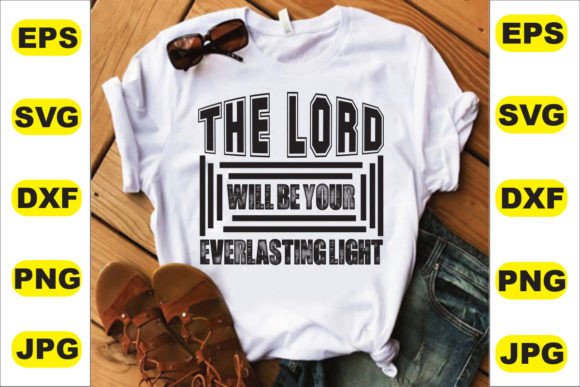
The immediate appeal of The Lord Will Be Your T Shirt Design lies in its clean, typographic focus. In the world of T-Shirt Designs and Graphics, clarity is king. This design avoids unnecessary clutter, relying on strong letterforms to convey its message. For an embroiderer, this is often a double-edged sword. Text-heavy designs require precise digitizing to ensure legibility, especially at smaller sizes. The mood here is serene and confident, making it suitable for a wide range of demographics, from youth group apparel to mature, boutique-style home goods.
When I first loaded the file into my editing software, I looked for smooth curves and logical stitch paths. Since the main file description notes that it is made with 100 vector shapes and is resizable, the underlying structure appears robust. However, "resizable" does not always mean "embroidery-ready" at any scale. My initial test involved scaling the design down to fit a 4x4 inch hoop, a common size for left-chest logos on polos or small patches. The visual personality held up well, maintaining its integrity without the letters merging into an illegible blob.
Real-World Application: From Sweatshirts to Tote Bags
To truly understand the value of an embroidery file, you must imagine it on actual products. I simulated this design on several common items to gauge its versatility. For a sweatshirt embroidery project, the design shines. The thicker fabric of a hoodie or crewneck provides a stable base for the text, allowing the stitches to sit proudly on the surface. I envision this working beautifully as a central chest piece or even across the back for a statement look.
I also considered its use on a canvas tote bag design. Here, the durability of the thread becomes a selling point. Unlike printed ink, which can crack or fade after repeated washing, embroidered text adds texture and perceived value. For an Etsy seller or small shop product creator, this distinction is crucial. Customers often perceive embroidered items as higher quality handmade products. Whether used for church events, family reunions, or daily wear, the design lends itself well to custom apparel that needs to withstand regular use.
Another interesting application is baby embroidery. While the message is universal, the font style might need careful scaling for infant garments. On a soft onesie or a receiving blanket, a smaller version of this design could serve as a meaningful personalized gift for baptisms or blessings. However, this requires extra attention to stitch density to ensure the fabric does not pucker or become too stiff for a baby’s sensitive skin.
Technical Considerations and Stitching Challenges
While the aesthetic is strong, practical execution requires attention to detail. One of the primary concerns with text-based design assets is the handling of small serifs or tight kerning. If you are using a satins stitch for the lettering, you must ensure the column width is appropriate for your thread weight. Too wide, and the stitches may snag; too narrow, and the thread may break or fail to cover the fabric adequately.
I recommend testing the design on scrap fabric before committing to a final embroidery project. Pay close attention to the stitch density. If the design feels too dense, it can cause puckering, especially on lighter fabrics like cotton tees or linen tea towels. Using a proper stabilizer is non-negotiable here. For stretchy fabrics, a cut-away stabilizer is essential to maintain the shape of the garment over time. For woven fabrics like tote bags or aprons, a tear-away might suffice, but always test first.
Curved surfaces present another challenge. If you plan to use this on a cap or hat, the distortion caused by the curve can alter the appearance of the text. You may need to adjust the pull compensation in your digitizing software or choose a simpler font variation if available. Additionally, when working on dark fabrics, consider using an underlay stitch that matches the top thread or the fabric color to prevent show-through, ensuring the thread colors pop against the background.
Commercial Viability and Brand Consistency
For craft business owners and commercial embroidery professionals, the licensing and file formats are critical. The product includes EPS, DXF, PNG, SVG, and JPEG files. This variety is excellent for multi-platform use. The SVG and EPS files are ideal for further customization in vector software before converting to an embroidery format, while the PNG and JPEG are perfect for creating printable mockups for your online store listings.
However, always confirm the specific license terms before selling finished items. Some designers allow commercial use of the physical product but restrict the resale of the digital file itself. Assuming the license permits, this design fits well into a lineup of faith-based holiday embroidery or everyday inspirational wear. It enhances brand consistency by offering a professional, clean look that appeals to a broad audience.
Final Verdict and Designer Notes
In conclusion, The Lord Will Be Your T Shirt Design is a solid addition to any designer’s library. Its strength lies in its simplicity and adaptability. It performs well on medium to heavy-weight fabrics and offers a professional finish that customers appreciate. To get the best results:
- Test on scrap fabric: Always run a test stitch-out to check for puckering or thread breaks.
- Check contrast: Ensure your thread color contrasts sufficiently with the fabric, especially for readability.
- Review stitch density: Adjust density if stitching on delicate or stretchy materials.
- Confirm hoop size: Ensure the design fits comfortably within your machine’s hoop capabilities without excessive trimming.
- Inspect small details: Zoom in on the digitized file to check for redundant stitches or poor pathing.
Whether you are creating a custom apparel line, a unique embroidered patch, or a thoughtful personalized gift, this design offers the reliability and visual appeal needed for successful projects. By paying attention to the technical details of stitching and fabric selection, you can transform this digital asset into a tangible product that resonates with your audience.