Raising Tiny Disciples: A Designer’s Embroidery Review
As an embroidery designer who has spent years digitizing and testing thousands of motifs, I approach every new file with a critical eye. It is not just about whether the image looks cute on a screen; it is about how those lines translate into thread, how the tension holds up on fabric, and whether the final finished product justifies the time and material cost. Recently, I evaluated Raising Tiny Disciples, a faith-based graphic that promises to bridge the gap between spiritual sentiment and modern nursery or apparel aesthetics. Here is my practical assessment of how this design performs in real-world embroidery project scenarios.
First Impressions and Visual Personality
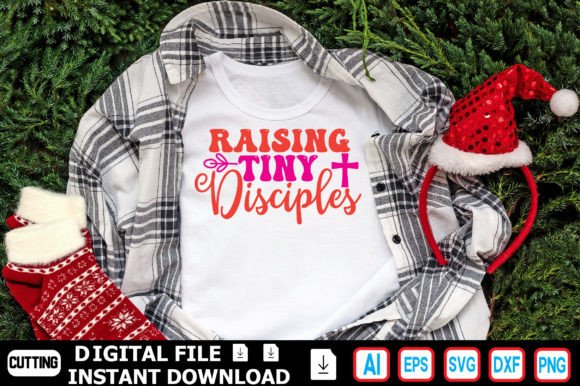
The first thing that strikes me about Raising Tiny Disciples is its balanced composition. In the world of T-Shirt Designs and Graphics, clarity is king. This design avoids the clutter that often plagues religious-themed artwork, opting instead for clean lines and a layout that breathes. The mood is gentle yet confident, making it versatile enough for both juvenile items and adult apparel. When viewing the source files, the vector paths appear smooth, which is a promising sign for digitization potential. For those of us who convert SVGs into machine-readable code, clean vectors mean fewer node errors and smoother curves in the final stitch output.
The visual personality here is warm and inviting. It does not scream for attention but rather invites a closer look. This subtlety is crucial for high-end handmade product lines where understated elegance often sells better than loud, oversized graphics. Whether you are aiming for a rustic farmhouse vibe or a modern minimalist boutique look, this design integrates seamlessly without overpowering the garment it adorns.
Real-World Application: The Custom Tote Scenario
To truly test a design, I imagine it in a specific production context. Let’s consider a custom order for a church mother’s group requesting matching tote bags. I visualize Raising Tiny Disciples stitched onto a heavy canvas tote bag design. Canvas is unforgiving; it shows every puckering issue and misaligned stitch. Because this design likely relies on clear typography and distinct shapes, it translates well to this textured surface.
In this scenario, the design serves as a focal point. I would recommend using a contrasting thread colors palette—perhaps a soft cream or gold thread on a natural tan canvas—to highlight the details. The result is a functional, meaningful accessory that feels personal and high-quality. It transforms a simple bag into a statement piece that users will proudly carry to market days or Sunday services. This kind of application demonstrates the design’s strength in creating emotional connections through personalized gift items.
Versatility Across Product Lines
Beyond totes, this graphic shines in sweatshirt embroidery. The soft texture of fleece or cotton blends provides an excellent backdrop for fill stitches. When applied to a crewneck sweatshirt, the design adds value to what might otherwise be a blank wholesale item. For Etsy seller accounts and small shop product listings, this versatility is a major asset. You can market the same digital asset across multiple categories: baby onesies, adult tees, kitchen towels, and even pillow covers.
For baby embroidery projects, the scale becomes critical. If the design includes fine details, they must be simplified for small hoops. However, the core message of "Raising Tiny Disciples" is inherently suited for nursery decor and infant wear. Imagine this stitched on a muslin swaddle blanket or a denim jacket for a toddler. The thematic fit is natural, reducing the need for excessive marketing explanation because the product speaks for itself.
Technical Considerations for Stitchers
While the aesthetic appeal is strong, technical execution requires careful planning. Since Raising Tiny Disciples is provided as a set of vector and raster files (AI, SVG, DXF, EPS, PNG), it is technically a cut file package rather than a pre-digitized embroidery file. This distinction is vital. As a designer, I must emphasize that you cannot simply load an SVG into your embroidery machine. You must digitize it or hire a digitizer to convert these graphics into a proper machine embroidery design.
When converting these design assets, pay close attention to stitch density. Religious typography often involves serifs or intricate line work. If the letters are too thin, they may disappear under the thread or cause fabric distortion. I recommend using a combination of satins stitch for borders and text, and fill stitch for any larger graphical elements. Avoid overly dense fills on stretchy fabrics like jersey knits, as this can lead to tunneling or puckering.
Another critical factor is the hoop size. Ensure your chosen hoop accommodates the full width of the design without cropping essential elements. For curved surfaces like caps, you must account for the curvature in your digitizing process. A design that looks flat on paper can distort significantly on a structured cap if not properly compensated. Always run a test stitch-out on scrap fabric identical to your final material. This step saves costly garments from ruin and allows you to adjust tension and stabilizer choices.
Navigating Fabric and Stabilizer Choices
The success of any commercial embroidery project hinges on stabilization. For lightweight fabrics like tea towels or baby onesies, a cut-away stabilizer is non-negotiable to prevent stretching during washing. For heavier items like denim jackets or canvas totes, a tear-away might suffice, but I often prefer cut-away for durability. The fabric texture also plays a role; highly textured materials may obscure fine details, so consider simplifying the design or increasing stitch thickness for such applications.
Dark fabrics present another challenge. If you are stitching light-colored thread on a black sweatshirt, ensure your digitizing includes an underlay stitch to prevent the background fabric from showing through. This technique enhances the vibrancy of the top threads and gives the embroidered patch or direct stitch a professional, opaque finish.
Business Value and Brand Consistency
From a business perspective, Raising Tiny Disciples offers strong potential for brand building. Faith-based niches are loyal and engaged. By offering high-quality, well-executed designs in this category, you build trust with your customers. They are not just buying a shirt; they are buying an expression of their values. When the stitching is clean and the design is crisp, it reinforces the perception of quality associated with your brand.
Use this design in your printable mockup portfolios to attract clients looking for holiday embroidery or baptism gifts. The transparent PNG included in the package is particularly useful for creating these digital previews. Showcasing the design on various products helps customers visualize the end result, increasing conversion rates for your craft business.
However, always verify licensing terms. While the package includes formats suitable for cutting machines and graphic design, ensure you have the right to use the resulting embroidered items for commercial sale. Most designers allow commercial use of finished physical goods, but restrictions may apply to reselling the digital files themselves. Clarity here protects your business and respects the creator’s intellectual property.
Final Verdict
Raising Tiny Disciples is a robust addition to any designer’s library, provided you understand the workflow from vector to stitch. It is not a plug-and-play embroidery file, but a high-quality graphic foundation ready for professional digitization. Its strength lies in its emotional resonance and visual clarity. When executed with proper attention to stitch density, stabilizer selection, and fabric compatibility, it elevates simple garments into cherished keepsakes. For the serious apparel decorator or creative entrepreneur, this design offers the flexibility and appeal needed to create standout products in a crowded marketplace.